Belinda Bencic and Elina Svitolina Make WTA History: How Mothers Return to the Top 10
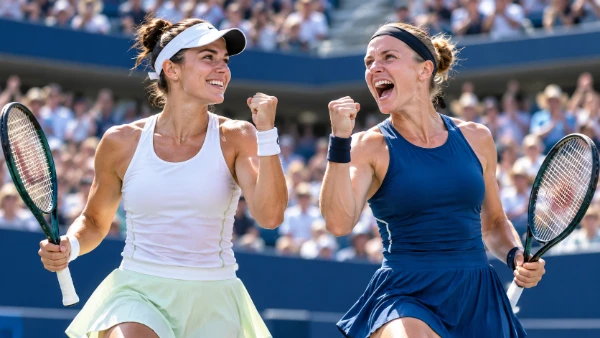
Belinda Bencic and Elina Svitolina reached a milestone in February 2026 that had never previously occurred in the history of the WTA rankings: two mothers were inside the singles Top 10 at the same time. Bencic had already returned to the elite group in January after an exceptionally rapid rise following the birth of her daughter Bella, while Svitolina joined her after reaching the Australian Open semi-finals. Their routes were very different. The Swiss player rebuilt her ranking at remarkable speed after returning to competition in late 2024, whereas Svitolina’s progress stretched across several seasons following the birth of her daughter Skaï in October 2022. The achievement therefore tells a broader story than the rankings alone. It shows how elite players can rebuild careers after childbirth, how individual recovery schedules differ and how changes in WTA rules and maternity support are making it more realistic for players to combine parenthood with professional tennis.
The 2026 Top-10 Milestone That Changed WTA History
The landmark officially arrived on 2 February 2026. Bencic was ranked No. 9 and Svitolina moved to No. 10 after the Australian Open, making them the first mothers ever to appear simultaneously in the WTA singles Top 10. Bencic had returned to the Top 10 several weeks earlier, on 12 January, following Switzerland’s run to the United Cup final. Svitolina then completed the historic pairing with a semi-final appearance in Melbourne. Her Australian Open run included victories over Mirra Andreeva and Coco Gauff before Aryna Sabalenka ended her ten-match winning streak in the last four. It was Svitolina’s fourth Grand Slam semi-final and her second since becoming a mother.
The distinction matters because mothers reaching the highest level of women’s tennis is not itself unprecedented. Before Bencic and Svitolina, Margaret Court, Evonne Goolagong Cawley, Kim Clijsters and Serena Williams had all been ranked inside the Top 10 after becoming mothers. Bencic and Svitolina became the fifth and sixth players to achieve that distinction in the ranking era recognised by the WTA. What had never happened, however, was two mothers occupying Top-10 positions together. That difference turned an individual comeback story into a wider moment for the women’s game.
Neither player was simply restored to the Top 10 because of maternity protection. The WTA’s Special Ranking rules can help eligible players enter tournaments after an extended absence, but they do not award the ranking points required to hold a current Top-10 position. Those points still have to be earned through tournament results. That distinction is important when assessing both comebacks. Protected entry can reduce one obstacle at the beginning of a return, yet months of victories against current opponents are required before a player can rebuild an ordinary ranking capable of placing her among the world’s ten highest-ranked players.
Where Bencic and Svitolina Stand Later in 2026
The February milestone represents a particular moment in the season rather than a claim that both players remained inside the Top 10 throughout 2026. By 6 October, Svitolina was ranked No. 7, while Bencic stood at No. 12. The change does not diminish what occurred in February; instead, it illustrates the normal movement of a competitive ranking system. Points are gained and defended throughout the year, and even small differences in results at major tournaments can move a player several places. For Svitolina, the months after her Top-10 return produced another rise. For Bencic, the season brought solid results but fewer ranking points than during the extraordinary surge of her first full year back.
Svitolina’s 2026 season confirmed that her Australian Open performance was not an isolated run. She began the year by winning the Auckland title and then reached the semi-finals in Melbourne. Later she advanced to her first WTA 1000 final in eight years in Dubai. In May she went a step further in Rome, defeating Elena Rybakina, Iga Swiatek and Coco Gauff during a run to her third title at the tournament. It was her first Rome triumph since 2018 and another major result in the second stage of her career. Her ranking subsequently climbed as high as No. 7 during the season.
Bencic’s 2026 results were less spectacular than her 2025 comeback season, but she remained close to the Top 10. Her ranking reached No. 9 in February and she was still No. 12 in early October. She reached the fourth round at Roland Garros and Wimbledon and made the quarter-finals of the WTA 1000 event in Toronto, where she withdrew before facing Coco Gauff. Those results kept her among the leading players despite the challenge of defending points accumulated during 2025. Her position also gives useful perspective on the achievement: reaching the Top 10 after childbirth is difficult, but remaining there requires the same week-by-week consistency demanded of every other elite player.
How Belinda Bencic Rebuilt Her Career After the Birth of Bella
Bencic’s comeback developed unusually quickly. She played her final tournament before maternity leave in San Diego in September 2023 and gave birth to her daughter Bella on 23 April 2024. Rather than returning immediately to a full WTA schedule, she chose a gradual route. Her first competitive appearance came at the ITF W75 event in Hamburg at the end of October 2024, more than a year after her previous professional match. She also represented Switzerland against Serbia in the Billie Jean King Cup play-offs in November. At that stage the immediate objective was not a Top-10 ranking. Bencic was testing her competitive level, physical readiness and the practical demands of travelling to tournaments with a young child.
The scale of her subsequent rise became clear during 2025. Bencic began January ranked No. 421 and finished the season at No. 11. She won two WTA 500 titles, first in Abu Dhabi and later in Tokyo, and produced the best Wimbledon result of her career by reaching the semi-finals. She had previously been a US Open semi-finalist and an Olympic singles champion, so the quality required to compete at that level was already established. What was uncertain was how rapidly it could return after pregnancy, childbirth and more than a year away from regular competition. By the end of 2025, that question had largely been answered.
The final step back into the Top 10 came at the beginning of 2026. Bencic was one of Switzerland’s leading performers at the United Cup, winning all five of her singles matches as the team reached its first final in the competition. She also won four of five doubles matches. Those results moved her from No. 11 to No. 10 on 12 January, marking her first Top-10 appearance since March 2023. Only around fifteen months earlier she had returned to competition without a current ranking. The speed of the climb made her case unusual even among successful maternity comebacks.
A Comeback Built in Stages Rather Than One Immediate Return
An important part of Bencic’s route was the decision to begin below the highest level of the WTA Tour. Playing in Hamburg in October 2024 gave her competitive matches without immediately building an entire season around major events. She later explained that those early appearances helped her assess both her tennis and the practical side of travelling with Bella. That approach reflects an important reality of returning after childbirth: being medically ready to train, being physically ready to compete and being prepared for the weekly routine of professional tennis are not necessarily the same stage of recovery.
The Special Ranking system helped provide access to appropriate events after her absence, but Bencic still had to construct a new current ranking through results. Her 2025 progress shows how quickly that can happen when a player repeatedly advances deep into tournaments. Titles in Abu Dhabi and Tokyo generated significant points, while her Wimbledon semi-final added one of the largest contributions of the season. By reaching No. 11 at the end of the year, she no longer needed the story of her absence to explain her position. Her results alone had again made her one of the highest-ranked players in the game.
Her style also gave her a recognisable foundation on which to rebuild. Bencic has long relied on clean timing, early contact and the ability to redirect an opponent’s pace rather than trying to win every point through sheer power. Those qualities did not remove the physical work required after pregnancy, but they gave her an established tennis identity when she returned. The more difficult task was restoring match rhythm, movement, endurance and confidence against players who had continued competing during her absence. Her rise from outside the rankings to the Top 10 in little more than a year shows how effectively those pieces came together.
Elina Svitolina Took a Longer Road Back to the Top 10
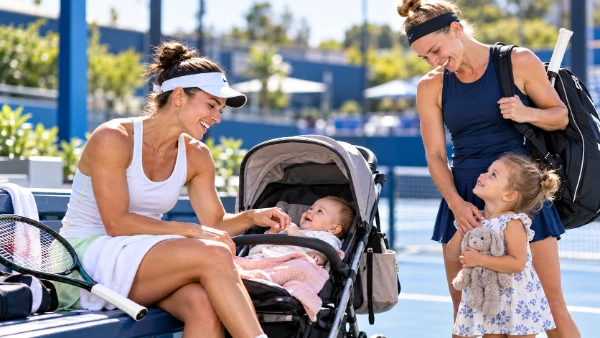
Svitolina’s return followed a different timetable. She gave birth to Skaï in October 2022 and came back to WTA competition in Charleston in April 2023, having last played on tour in March 2022. Her first months demonstrated how misleading an early comeback ranking can be. By the time she arrived in Strasbourg in May 2023, Svitolina was ranked No. 508. She nevertheless won the title, beating Anna Blinkova in the final to collect the 17th WTA singles trophy of her career and her first as a mother. The result immediately showed that her ranking reflected a long absence rather than the level of tennis she was capable of producing.
Her progress continued at the biggest tournaments. Svitolina reached the Roland Garros quarter-finals and Wimbledon semi-finals in 2023, including a Wimbledon victory over then-World No. 1 Iga Swiatek. She ended that season at No. 25, then finished 2024 at No. 23. In 2025 she won the WTA 250 title in Rouen without dropping a set and moved closer to the leading group, reaching a season-high ranking of No. 13 and finishing the year at No. 14. Unlike Bencic’s rapid climb, Svitolina’s route back to the Top 10 developed through several seasons of sustained results.
The breakthrough finally came during the opening month of 2026. Svitolina won the Auckland title and carried that form into the Australian Open, where her victories over Andreeva and Gauff took her to the semi-finals. When the rankings were updated on 2 February, she climbed from No. 12 to No. 10, returning to the Top 10 for the first time since October 2021. Her season improved further during the spring. A final in Dubai and the Rome title helped push her as high as No. 7, and by early October she remained in that position. Rather than merely reaching her pre-maternity level again, she had become a serious contender at major events in her early thirties.
Why Their Top-10 Returns Matter Beyond Two Individual Careers
Bencic and Svitolina also benefited from a WTA environment that has gradually introduced more support for players starting families. The Special Ranking system can protect access to tournaments after pregnancy and an extended absence, giving players time to rebuild without beginning entirely from the lowest entry levels. Crucially, it does not guarantee victories or a permanent ranking position. Bencic and Svitolina still had to earn the points that carried them into the Top 10. Their results therefore illustrate what maternity rules can realistically do: remove some structural disadvantages of a lengthy absence while leaving competitive achievement in the hands of the player.
Support expanded further in 2025 with the introduction of the PIF WTA Maternity Fund Program. Eligible players can receive up to 12 months of paid maternity leave, while the wider family programme includes fertility-related assistance and health support. More than 320 players were eligible for benefits when the maternity fund was launched. For highly ranked stars, financial assistance may be only one part of the equation, but the measures can be especially important for players further down the rankings, where time away from prize money can make a return considerably harder to finance.
The record set in February 2026 should therefore be viewed as both a sporting achievement and evidence of how careers in women’s tennis are changing. Court, Goolagong Cawley, Clijsters and Williams had already shown that motherhood and Top-10 tennis could coexist, but Bencic and Svitolina were the first to occupy that space together. Their contrasting timelines are equally instructive. Bencic needed roughly fifteen months from her first comeback event to return to the Top 10, while Svitolina took almost three years after resuming competition. There is no single model for a successful return after childbirth. Recovery, family arrangements, health, age, form and tournament results all differ. What 2026 demonstrated is that motherhood no longer has to mark the end of a player’s realistic route back to the highest level of the WTA rankings.