How Next-Generation Simulators Are Transforming F1 and MotoGP Rider Training
Modern motorsport has entered a stage where digital technology plays almost the same role as mechanical engineering. Formula 1 teams and MotoGP manufacturers now rely heavily on advanced simulators to prepare drivers and riders for race weekends, technical development, and unpredictable track conditions. What once served as a simple training aid has evolved into a sophisticated environment capable of reproducing tyre degradation, aerodynamic behaviour, weather changes, suspension movement, and even mental pressure during competition. By 2026, simulator programmes have become essential for both experienced champions and academy prospects trying to secure their place in elite racing categories.
The Evolution of Racing Simulators in Modern Motorsport
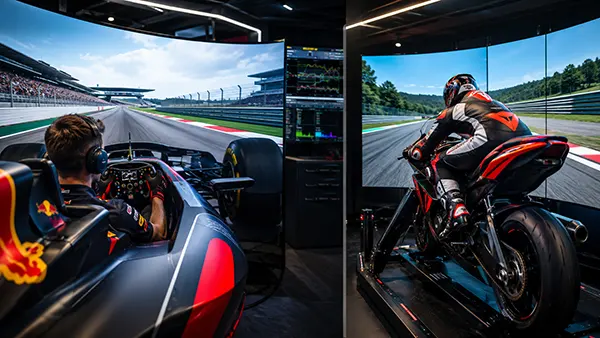
During the early 2000s, racing simulators were mainly used for entertainment or basic familiarisation with circuits. Today’s systems operate on an entirely different level. Formula 1 organisations such as Mercedes-AMG Petronas, Red Bull Racing, Ferrari, and McLaren invest millions of pounds into simulator departments that function around the clock. These facilities combine motion platforms, laser-scanned circuits, AI-assisted telemetry analysis, and real-time vehicle modelling to recreate conditions with impressive accuracy.
MotoGP manufacturers have also accelerated development in this area. Ducati, Yamaha, KTM, and Aprilia use virtual environments to help riders adapt to new bike configurations without spending excessive time on physical testing. Since MotoGP regulations limit track testing opportunities, simulator sessions provide a practical way to experiment with braking balance, corner entry behaviour, traction control strategies, and tyre performance before arriving at an actual circuit.
The realism of these systems has increased dramatically due to advances in computing power and data collection. Teams now gather detailed telemetry from race weekends and transfer it into simulation software almost immediately. Engineers can reproduce exact conditions from previous races, allowing drivers and riders to analyse mistakes or prepare for future events with highly specific information. In many cases, competitors arrive at a Grand Prix already familiar with dozens of race scenarios.
How Virtual Technology Replicates Real Track Conditions
One of the most significant improvements in next-generation simulators is environmental realism. Laser scanning technology captures every bump, kerb, elevation change, and surface irregularity on a racing circuit. This information is then integrated into simulation engines capable of recreating how a car or motorcycle reacts at various speeds and temperatures.
Weather simulation has also become more sophisticated by 2026. Teams can prepare drivers for sudden rainfall, strong crosswinds, or changing grip levels during a race stint. Formula 1 simulators, for example, can reproduce tyre overheating patterns and aerodynamic instability caused by turbulent airflow from rival cars. MotoGP systems now model tyre flex, suspension compression, and rider movement with far greater precision than previous generations.
Another major development involves force feedback and motion systems. High-end racing simulators use hydraulic or electric motion rigs that reproduce acceleration forces, heavy braking zones, and rapid direction changes. While they cannot fully replicate the physical strain of an actual race, they provide enough realism to train reflexes, improve consistency, and strengthen decision-making under pressure.
Simulator Training and Driver Performance Development
For modern F1 drivers and MotoGP riders, simulator work is no longer optional preparation. It forms a central part of weekly training schedules throughout the season. Before every Grand Prix, competitors spend hours studying racing lines, fuel-saving strategies, tyre management plans, and overtaking opportunities inside virtual environments designed specifically for upcoming events.
Young drivers entering Formula 1 benefit particularly from simulator programmes. Many rookies now complete thousands of virtual laps before racing on unfamiliar circuits. This preparation shortens adaptation time and helps teams evaluate how quickly a prospect learns complex systems such as energy recovery deployment, brake migration settings, or tyre conservation techniques. Drivers promoted from Formula 2 frequently mention simulator experience as a decisive factor in their transition to F1 machinery.
MotoGP riders also use simulators to refine racecraft. Because modern motorcycles are extremely sensitive to rider positioning and throttle input, virtual practice allows athletes to experiment with riding styles in a safer environment. Riders recovering from injuries can continue tactical preparation even when physical testing is impossible. This became particularly important after several high-profile injury cases in recent MotoGP seasons demonstrated the value of maintaining mental sharpness away from the track.
The Role of Data Engineers and AI Analysis
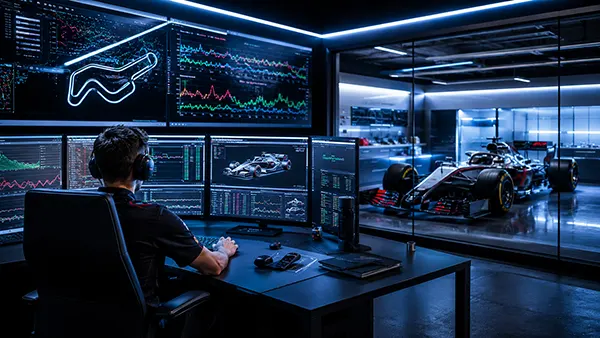
Behind every advanced simulator session stands a large group of engineers and analysts. Telemetry specialists monitor steering inputs, throttle application, braking pressure, tyre temperatures, and aerodynamic behaviour in real time. This data helps teams compare performance between drivers, identify weak areas, and develop more effective race strategies.
Artificial intelligence has become increasingly influential in motorsport simulation. Machine learning systems analyse massive volumes of historical data to predict race scenarios and setup outcomes. By 2026, several Formula 1 teams use AI-assisted modelling to recommend optimal tyre strategies or energy deployment plans based on weather forecasts and historical circuit characteristics.
In MotoGP, AI systems help engineers evaluate how different electronic settings affect corner exits and tyre wear. Riders can review virtual laps alongside predictive models showing where tenths of a second may be gained or lost. Instead of relying purely on instinct, modern competitors combine personal feel with advanced analytical support, creating a far more scientific approach to racing preparation.
The Future of Simulator Technology in F1 and MotoGP
The next stage of simulator development will likely focus on immersion and physical realism. Engineers are currently working on systems capable of reproducing greater G-forces and more detailed feedback from tyres and suspension components. Improvements in virtual reality hardware may also allow drivers and riders to experience more natural depth perception and spatial awareness during simulation sessions.
Remote collaboration is another area expanding rapidly. By 2026, several racing organisations already operate cloud-connected simulation environments that allow engineers in different countries to participate simultaneously. A driver can complete laps in Europe while analysts based in Japan or the United States monitor telemetry live and suggest setup adjustments in real time.
Cost efficiency will continue driving innovation as well. Physical track testing remains extremely expensive and heavily regulated in Formula 1 and MotoGP. Simulators reduce operational costs while allowing manufacturers to accelerate development cycles. This balance between financial control and competitive performance explains why teams continue investing heavily in simulation technology despite the enormous initial expense.
Why Human Skill Still Matters Despite Advanced Technology
Although simulator systems have become remarkably accurate, they cannot completely replace real-world racing experience. Physical sensations such as fear, fatigue, changing weather pressure, and unpredictable wheel-to-wheel battles still affect drivers differently on an actual circuit. Many experienced racers note that virtual preparation improves readiness, but instinct and adaptability remain essential during live competition.
There are also limitations related to psychology. Simulator sessions occur in controlled environments without the same emotional intensity generated by packed grandstands, championship pressure, or sudden incidents during a race. Teams therefore combine simulator preparation with physical conditioning, reaction training, and mental coaching to ensure athletes remain prepared for every aspect of competition.
Even with these limitations, next-generation simulators have fundamentally changed how Formula 1 drivers and MotoGP riders prepare for racing. They provide safer development opportunities, accelerate technical understanding, and allow teams to process enormous quantities of performance data with unprecedented efficiency. As computing power and AI systems continue advancing, simulator technology will remain one of the defining elements shaping the future of international motorsport.