Formula 1 in 2026: How the New Technical Regulations Will Affect Team Strategies
The 2026 Formula 1 season marks one of the most significant regulatory changes introduced in recent decades. While technical rules have evolved regularly throughout the championship’s history, the latest package combines a redesigned power unit, active aerodynamics, revised chassis dimensions, lower vehicle weight targets and a stronger focus on electrical energy deployment. These changes are expected to influence every aspect of race preparation, from car development and aerodynamic philosophy to tyre management and race strategy. Teams that adapt quickly to the new engineering challenges could gain a decisive competitive advantage during the opening years of the new regulations.
The 2026 Technical Regulations Introduce a Different Engineering Philosophy
The new Formula 1 regulations are designed around improving efficiency rather than simply increasing outright performance. The internal combustion engine continues to use a 1.6-litre V6 turbocharged architecture, but the power unit now relies much more heavily on electrical energy. The MGU-H has been removed, while the output of the MGU-K has increased substantially, making energy recovery and deployment central elements of race performance. At the same time, Formula 1 continues using fully sustainable fuel, supporting the FIA’s long-term environmental objectives without abandoning high-performance combustion technology.
Car dimensions have also changed. The wheelbase has been shortened, the maximum width reduced and overall weight targets lowered compared with previous generations. Engineers therefore face a difficult balancing act between aerodynamic efficiency, structural rigidity and mechanical grip. Even relatively small improvements in packaging or weight distribution could translate into measurable gains over an entire race distance.
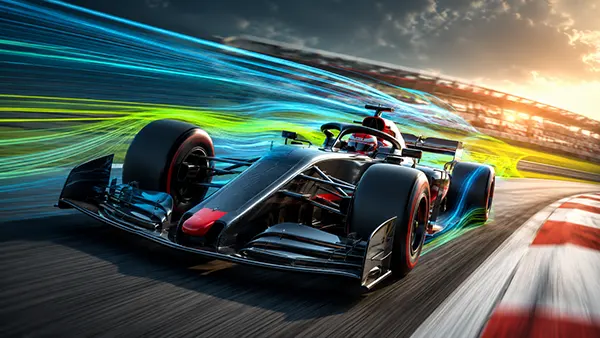
Another major innovation is the introduction of active aerodynamic systems. Unlike previous drag reduction concepts that focused primarily on overtaking, movable aerodynamic surfaces now allow cars to operate in different aerodynamic configurations depending on driving conditions. Low-drag modes improve straight-line efficiency, while higher downforce settings become available during braking and cornering. This fundamentally changes how engineers optimise the aerodynamic package.
Power Unit Development Will Shape Competitive Performance
The revised power unit regulations place unprecedented importance on electrical efficiency. Because the electric motor now contributes a significantly larger proportion of total power output, teams must carefully determine when stored electrical energy should be deployed during a lap. Engineers will continuously analyse circuit characteristics, braking opportunities and overtaking zones to maximise the benefits of each energy deployment cycle.
Reliability also becomes more complex under the revised technical package. Higher electrical loads require improved battery cooling, more efficient thermal management and sophisticated software capable of balancing performance against component longevity. During longer races, preserving battery temperature may become just as important as managing tyre degradation.
Power unit manufacturers including Ferrari, Mercedes, Honda, Audi and Red Bull Powertrains are entering a completely new competitive environment. Since every manufacturer begins under fresh technical regulations, historical advantages may become less significant, creating opportunities for newcomers capable of producing highly efficient hybrid systems from the beginning of the regulatory cycle.
Race Strategy Will Depend on Energy Management as Much as Tyre Performance
Traditional Formula 1 strategy has largely focused on tyre degradation, fuel consumption and pit-stop timing. Although these factors remain essential in 2026, race engineers must also monitor electrical energy availability throughout every stint. Deploying too much electrical power early in a lap could reduce acceleration later, particularly on circuits with multiple long straights.
Because active aerodynamics alter drag levels dynamically, overtaking calculations also become more sophisticated. Teams must predict not only tyre performance but also the interaction between aerodynamic modes, battery charge levels and traffic conditions. Simulation departments are therefore expected to play an even greater role during race weekends.
Weather conditions may further complicate strategic planning. Lower temperatures can influence battery performance, while higher ambient temperatures place additional demands on cooling systems. Engineers will increasingly integrate environmental data into strategic decision-making alongside conventional tyre and fuel models.
Simulation Technology Becomes Even More Important
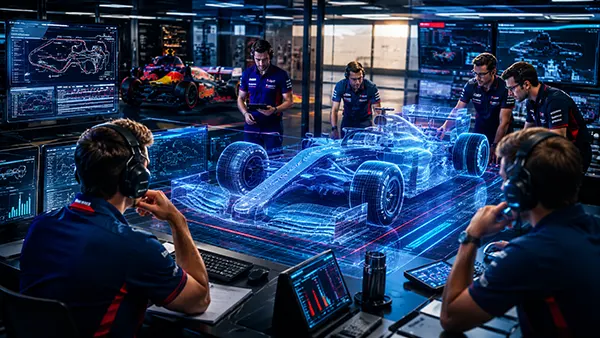
Modern Formula 1 teams already rely heavily on computational simulation before every Grand Prix, but the 2026 regulations significantly increase this dependence. Millions of possible race scenarios involving battery deployment, aerodynamic configurations, tyre degradation and safety car periods must be analysed before the cars even arrive at the circuit.
Machine learning and advanced predictive modelling are expected to assist strategy departments by identifying the most efficient combinations of energy usage and pit-stop timing. Instead of relying solely on historical race data, engineers will evaluate thousands of virtual race situations created specifically for each circuit.
Driver feedback remains equally valuable despite growing computational capabilities. Real-world tyre behaviour, balance changes and battery characteristics often differ from simulation predictions. Successful teams will combine accurate modelling with continuous driver communication to adjust strategic decisions throughout each race weekend.
Technical Flexibility Could Decide the First Years of the New Era
History shows that major Formula 1 regulation changes rarely produce identical levels of competitiveness across the grid. Teams that interpret the technical rules more effectively often establish an early advantage before rivals fully understand the strengths and weaknesses of alternative concepts. The 2026 regulations are likely to produce similar competitive variation during the initial seasons.
Development efficiency will become increasingly important because budget cap restrictions limit the number of major upgrades teams can introduce during the season. Every aerodynamic update, suspension modification or cooling improvement must therefore deliver measurable performance gains. Engineering departments will place greater emphasis on validating upgrades before committing valuable financial resources.
Manufacturers entering Formula 1 under the new regulations also introduce additional uncertainty. Audi joins the championship as a works power unit supplier, while Red Bull Powertrains begins competing with its own internally developed engine programme. Their performance relative to established manufacturers may significantly influence the competitive order throughout the regulation cycle.
Long-Term Success Will Depend on Adaptability
The most successful Formula 1 teams have consistently demonstrated an ability to respond quickly when regulations evolve. The 2026 technical package rewards organisations capable of integrating expertise across aerodynamics, hybrid technology, software engineering and race strategy rather than relying on excellence in only one technical discipline.
Drivers must also adapt their approach behind the wheel. Managing electrical deployment, responding to active aerodynamic behaviour and understanding revised vehicle characteristics require adjustments in driving style alongside close cooperation with race engineers. Small improvements in energy efficiency over a race distance could become the difference between finishing on the podium or outside the points.
As Formula 1 enters its next technical era, success is unlikely to depend on a single innovation. Instead, competitive advantage will emerge from the ability to optimise numerous interconnected systems simultaneously. Teams capable of combining efficient power units, intelligent aerodynamic design, advanced simulation tools and flexible strategic decision-making are expected to define the competitive landscape of Formula 1 throughout the 2026 regulation cycle.