The Most Significant Injuries of Spring 2026 in Football, Tennis and Basketball
Every professional sports season inevitably brings moments that reshape competitions far beyond the scoreboard. In spring 2026, several high-profile injuries across football, tennis and basketball significantly influenced tournament brackets, club strategies and even international selections. When a key player suddenly leaves the field or court, teams must rethink tactics, redistribute playing time and sometimes alter long-term plans for the entire season. These situations illustrate how fragile elite sport can be and why medical preparation, squad depth and recovery science have become essential elements of modern competition.
Major Football Injuries Affecting the 2026 Season
Football continues to be one of the most physically demanding sports in the world, with frequent acceleration, physical contact and sudden changes of direction creating constant injury risks. In early 2026, one of the most discussed cases involved Real Madrid forward Rodrygo, who suffered a severe knee injury that included an anterior cruciate ligament tear and meniscus damage. The surgery that followed ruled him out for roughly a year, meaning the player will miss the remainder of the club season and major international competitions. Such injuries often disrupt tactical systems built around pace and creativity in attack.
Another notable example came from international football where several national teams faced selection challenges due to injured strikers ahead of crucial matches. The Republic of Ireland, for instance, had to deal with fitness concerns around attacking players such as Evan Ferguson and Adam Idah before an important play-off fixture. Situations like these demonstrate how even moderate injuries can influence squad decisions and force coaches to explore unexpected replacements.
Football injury statistics also highlight why these events occur so frequently. Groin strains, knee ligament tears and muscle injuries remain among the most common problems for professional footballers due to repeated sprinting and intense match schedules. Studies indicate that a significant portion of injuries happen during high-intensity actions such as tackles or set pieces, which explains why key players can disappear from the lineup almost overnight. :contentReference[oaicite:1]{index=1}
How Clubs Adapt After Losing Key Players
When a leading footballer is sidelined, clubs often adjust their tactical structures rather than simply replacing the injured athlete. Managers may switch formations, reduce pressing intensity or shift creative responsibilities to midfielders. For instance, when attacking players are unavailable, teams frequently rely on more structured defensive systems and counterattacking approaches.
Squad depth has become a decisive factor in modern football. Clubs competing in domestic leagues, European tournaments and national cups must maintain larger rotations than in previous decades. Youth academy graduates and bench players suddenly gain opportunities when injuries occur, and these moments can shape entire careers.
Medical departments also play a growing strategic role. Clubs now invest heavily in rehabilitation technology, biomechanical analysis and injury-prevention programmes. Monitoring fatigue levels, training load and recovery metrics allows teams to reduce risks, although unpredictable match incidents still remain part of the sport.
Tennis Injuries and Their Impact on the 2026 Tournament Calendar
Professional tennis has experienced its own share of injury-related disruptions during the 2026 season. British player Jack Draper entered the year after recovering from a bone bruise in his serving arm that kept him away from competition for more than five months. Long layoffs in tennis can be particularly damaging because ranking points drop quickly if players miss major tournaments.
The recovery process also forced Draper to rebuild his training schedule and coaching team before returning to high-level competition. Such situations are common in tennis because the sport requires repetitive movements that place extreme stress on shoulders, elbows and wrists. Even a minor overuse injury can affect serve speed, forehand power and match endurance.
Major tournaments like Indian Wells, the ATP Masters series and Grand Slam events depend heavily on the presence of top players. When injuries occur shortly before these competitions, organisers and broadcasters face changes in matchups, ticket demand and global attention. As a result, the health of leading athletes can influence not only rankings but also the commercial success of entire events.
The Physical Demands of Modern Professional Tennis
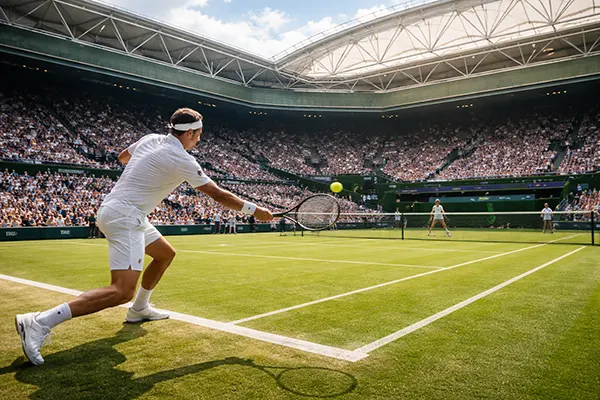
Tennis matches at elite level often last several hours and involve hundreds of explosive movements. Players repeatedly accelerate, stop, slide and rotate their bodies, creating stress on joints and muscles. The modern baseline style, characterised by long rallies and powerful strokes, has increased the physical demands compared with earlier eras.
Medical teams now focus on preventative conditioning, including shoulder stability training, core strength development and advanced recovery routines. Ice therapy, compression garments and specialised physiotherapy sessions are widely used during tournaments to maintain physical readiness between matches.
Despite these efforts, the global tennis calendar remains extremely dense. Players may compete across multiple continents within a few weeks, which limits recovery time and increases the likelihood of fatigue-related injuries. As the sport continues to grow commercially, balancing player health with scheduling remains one of its biggest challenges.

Basketball Injuries Reshaping League Competitions
Basketball leagues also witnessed significant injury news during the 2025–2026 season. One of the most discussed cases involved Boston Celtics star Jayson Tatum, who spent almost ten months recovering from a ruptured Achilles tendon before returning to the court. Rapid rehabilitation allowed him to rejoin the team earlier than many expected, though his minutes and workload required careful management.
Elsewhere in professional basketball, several teams lost important players to season-ending injuries. Guard Caleb Foster, for example, suffered a broken foot during a college game shortly before major tournament play, leaving his team without a starting playmaker during a critical stage of the season. Such injuries can dramatically influence tournament predictions and championship odds.
Basketball injuries frequently involve knees, ankles and feet due to constant jumping, landing and sudden directional changes. Ligament tears, stress fractures and muscle strains are particularly common among players who spend long minutes on the court. This physical intensity explains why injury reports are updated almost daily throughout the season.
Why Basketball Schedules Increase Injury Risk
The modern basketball calendar includes long regular seasons, international competitions and demanding travel schedules. NBA teams, for example, may play more than eighty regular-season games, often with several matches in a single week. Such workloads place continuous stress on athletes’ bodies.
Back-to-back games are especially challenging because players have limited recovery time between high-intensity performances. Fatigue reduces muscle stability and reaction speed, increasing the probability of ankle sprains or ligament injuries during jumps and rapid defensive movements.
To address these issues, many teams now use load-management strategies. Coaches sometimes limit playing time for star athletes during less critical games in order to preserve their health for the playoffs. While controversial among fans, this approach reflects the growing understanding that injury prevention is essential for long-term competitive success.