Tennis: How Court Surface Shapes Playing Style — Speed, Bounce and Shot Choices
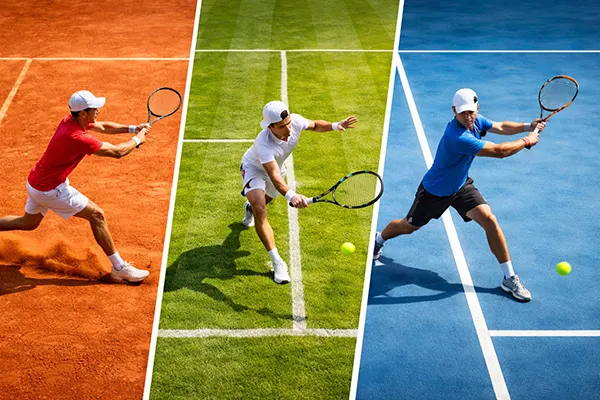
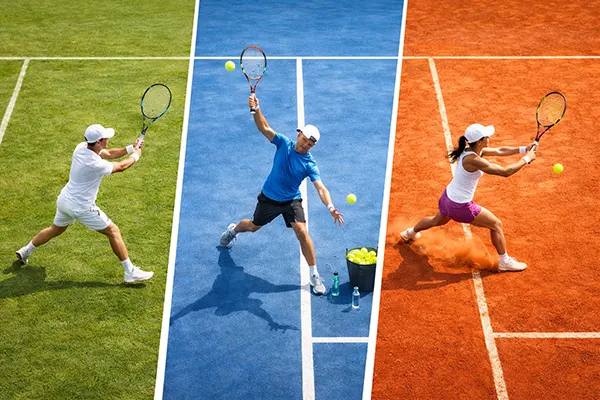
In modern tennis, the court surface is not a small detail — it actively changes how rallies develop, which shots feel reliable, and even how players build their careers. The same two athletes can produce completely different matches depending on whether they step onto clay, grass, or hard courts. Understanding these differences helps players train smarter, choose the right tactics, and interpret match dynamics more accurately.
Hard Courts: The Baseline Standard with Balanced Conditions
Hard courts are often considered the “neutral” reference point in tennis because they sit between the extremes of clay and grass. Their pace is usually medium, and the bounce tends to be consistent, which makes them a common surface for both training and high-level competition. However, not all hard courts play the same: acrylic layers, sand content, and maintenance levels can shift a court from relatively quick to noticeably slow.
From a tactical perspective, hard courts reward clean ball-striking and efficient movement. Players who take the ball early and redirect pace can control rallies, while strong defenders also have enough traction to counter-punch effectively. This balance is one reason hard-court success is often associated with all-round ability rather than a single specialised skill.
Shot selection on hard courts typically leans towards aggressive baseline patterns — heavy topspin forehands, flat backhand drives, and dependable first serves. Because the bounce is predictable, players can commit to timing and pace without the extra uncertainty found on grass. At the same time, hard courts still allow effective net play when approached with good positioning and well-timed transition shots.
How Hard Courts Influence Speed, Bounce and Key Decisions
In terms of speed, hard courts usually produce rallies that are fast enough to reward proactive play, but not so fast that points become entirely serve-dominated. The ball “comes through” cleanly, which encourages players to strike through the court, especially on short balls. As a result, taking time away becomes a central objective, particularly against opponents who rely on long defensive exchanges.
The bounce on hard courts is generally high enough to support topspin, but it stays stable across the court, helping players trust their contact point. This consistency makes hard courts a surface where technical fundamentals matter more than surface adaptation. Players with compact swings and precise footwork often gain an advantage because small timing errors are punished immediately.
Decision-making on hard courts often revolves around controlled aggression. Players are constantly judging whether to extend rallies or finish points early, depending on opponent positioning and ball speed. Returns tend to be more assertive than on grass, while still being less rushed than on the fastest surfaces. This is also where the backhand return and the ability to hit down the line under pressure become major match-defining skills.
Clay Courts: Slower Pace, Higher Bounce, Longer Patterns
Clay courts are defined by friction and sliding movement, which slows the ball and reduces the reward for pure power. Points last longer, and players must construct rallies with patience rather than relying on quick winners. The surface absorbs speed and makes it more difficult to hit through an opponent, which is why clay specialists often excel at consistency and tactical structure.
One of the biggest clay-court changes is how it affects movement. Sliding becomes an essential skill, and players who can control stops and starts gain a strong advantage in both defence and attack. This movement style also influences shot selection: because recovery can be slower, players often aim for higher margins, using heavy topspin and deep placement to push opponents back.
Clay rewards players who can vary trajectory and spin. Topspin forehands jump aggressively after the bounce, pushing opponents above shoulder height. Drop shots and short angles also become more effective because the slower court gives the hitter more time to set them up, while the opponent must cover extra distance to reach the ball. The tactical focus shifts towards wearing down an opponent and creating openings through repetition and positioning.
Why Clay Changes Rally Structure and Shot Priorities
Clay courts reduce the impact of flat hitting because the surface slows the ball after it lands. Even strong attackers often need multiple shots to break through. That is why building points becomes more deliberate — players typically use cross-court patterns to stretch the court, then switch direction only when the opening is clear.
The bounce on clay is usually higher and more variable than on hard courts, especially depending on weather and court condition. Higher bounce favours topspin, while the slight unpredictability discourages taking the ball too early on the rise. Players often adapt by hitting with more net clearance and more spin, which lowers error risk and keeps the opponent deeper behind the baseline.
Shot choices on clay often include more lobs, rolling angles, and drop shots than on faster surfaces. Defensive lobs buy time and reset points, while angled topspin pulls opponents off the court. The drop shot becomes a key weapon because it forces sprinting and changes the pace of rallies. Good clay-court players also use the backhand slice more strategically — not as a finishing tool, but as a way to change height and rhythm.
Grass Courts: Low Bounce, Fast Points, and Precision First-Strike Tennis
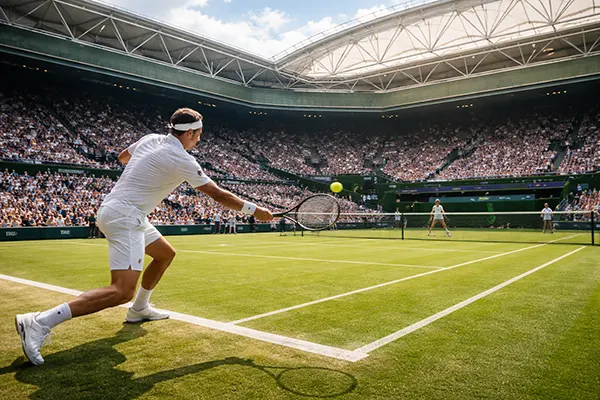
Grass courts remain the most distinct surface in tennis because they produce low bounce and short reaction time. Even with modern grass preparation, the ball stays lower after the bounce, and rallies often develop quickly. This environment rewards players who can serve accurately, return early, and keep the ball low with controlled, compact swings.
Movement on grass is also unique: traction is less predictable than on hard courts, and players must stay balanced on shorter steps. Instead of long slides, athletes rely on quick adjustment footwork and strong core stability. This affects how players defend — reaching wide balls is harder, and recovery time is limited, which increases the value of positioning and anticipation.
Because points are shorter, shot selection on grass prioritises first-strike patterns. A strong serve followed by a forehand into open space can be enough to finish many points. Attacking slices, low skidding backhands, and well-timed net approaches are particularly effective. Players who can keep the ball down and use variety usually gain an edge over opponents who rely on high, looping topspin.
How Grass Pushes Players Toward Serve, Return and Net Skills
Grass increases the importance of the serve because the ball travels through the court faster and stays low. Players who place serves well — especially wide or into the body — can force weak returns and control points immediately. The best grass servers do not rely only on speed; they rely on disguise, precision, and pattern execution on the second shot.
The bounce on grass tends to be lower and less consistent than on other surfaces, which can interrupt rhythm. Players often respond by shortening their swings, focusing on clean contact, and keeping the ball low. Slices become more valuable because they skid after the bounce, staying below an opponent’s ideal strike zone and making aggressive topspin replies more difficult.
Shot selection is heavily influenced by time pressure. Returns are often blocked rather than fully swung, and players look to take the ball early to avoid being pushed back. Net approaches increase because passing shots become harder when the bounce is low and the ball skids. Even baseline players often add more chip returns, short angles, and surprise serve-and-volley plays to avoid getting trapped in uncomfortable, rushed exchanges.