Formula 1 in 2026: How Active Aerodynamics Changed Qualifying and Race Predictions
Formula 1 entered 2026 with one of the broadest rule changes in its history, and active aerodynamics became the feature that most visibly altered how performance is assessed. Movable elements on both wings now reduce drag on designated straights and return the car to a higher-downforce setting for corners. That sounds simple, yet it has changed the meaning of practice times, speed-trap figures, qualifying simulations and long-run data. A car can look ordinary in one sector and exceptionally strong in another because its real advantage lies not only in total downforce or engine power, but in how efficiently it moves between aerodynamic states while managing electrical energy and tyre temperature. Forecasting pole position or a Grand Prix result therefore requires more context than it did under the previous rules. The first half of the 2026 season has shown that track layout, wind, energy deployment, traffic and tyre behaviour can all reverse expectations formed on Friday.
Why Active Aero Rewrote the Performance Map
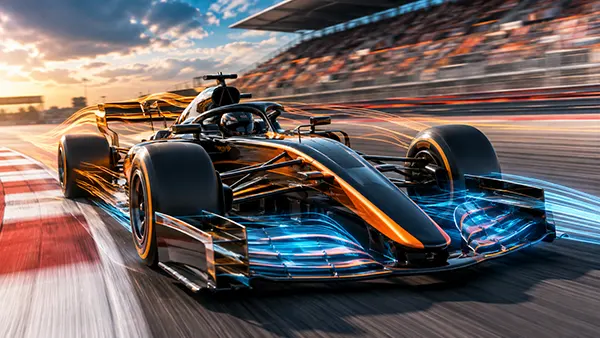
The central change is the use of Straight Mode and Corner Mode. In Corner Mode, the front and rear wing elements remain in their higher-downforce position, helping the driver brake, turn and accelerate with greater stability. On designated straights, the movable elements open into Straight Mode, reducing both drag and downforce so the car can travel faster with less resistance. Unlike the former DRS arrangement, this low-drag setting is not reserved only for a pursuing driver within one second of another car. Every driver can use it in the approved zones on every normal lap. As a result, straight-line efficiency is no longer a special overtaking aid added to a conventional aerodynamic set-up. It is built into the basic performance cycle of the car and affects qualifying, defensive driving, energy use and the way teams choose their wing configuration.
Before 2026, forecasts often began with a familiar compromise. A team could add wing for better cornering and accept a loss on the straights, or trim the car for higher top speed and surrender some grip in faster turns. That compromise still exists, but active aero has narrowed and reshaped it. A car carrying useful downforce in Corner Mode can shed part of the associated drag on the straight, while a low-drag design still needs enough balance when both wings return to their closed positions. The decisive question is therefore not simply which car has the most downforce or the strongest power unit. Analysts must ask how stable the car remains during changes of state, whether the front and rear respond in harmony, how much speed is carried onto the straight, and whether the driver can trust the balance when the wings return to Corner Mode before braking.
The effect is amplified by the rest of the 2026 package. The cars are shorter, narrower and lighter than their 2025 predecessors, the tyres are slimmer, and the floor produces downforce differently after the removal of the long ground-effect tunnels used in the previous rules cycle. At the same time, a much larger share of total power comes from the electrical side of the hybrid system. These changes mean that old circuit labels have become less reliable. A track once described as an obvious low-downforce venue may now reward a car that is efficient in Straight Mode but still secure over kerbs and during rapid direction changes. Likewise, a traditional high-downforce circuit may expose a weak transition between wing settings or poor electrical deployment. Historic form remains useful, but it carries less predictive weight than current evidence from comparable 2026 circuits.
Straight Mode, Corner Mode and the End of Simple Speed Comparisons
Speed-trap rankings used to provide a quick indication of drag level, engine strength and possible race vulnerability. In 2026, the number is harder to interpret on its own. A high terminal speed may come from an efficient active-aero configuration, strong electrical deployment, a tow, a better exit from the previous corner or a deliberate decision to spend more battery energy on that part of the lap. A lower figure does not automatically mean that the car is inefficient. The driver may have harvested energy, encountered traffic, opened the lap with a different battery target or prioritised acceleration elsewhere. Useful analysis now compares the speed trace across the entire straight, not only the final reading. The point at which a car begins to gain or lose speed often reveals more than the speed measured at the end.
Corner data also needs a different reading. When the wings return to Corner Mode, the car must regain aerodynamic load in a controlled and predictable way. If that process disturbs the balance, the driver may hesitate during turn-in, brake earlier or struggle to commit through a fast sequence. The time loss can be small in a single corner but significant over a qualifying lap. It can also increase tyre sliding, which matters more during a long race than during one attempt on fresh soft tyres. This is why two cars with similar top speeds can produce very different lap times. One may gain its speed cleanly while preserving confidence in the following braking zone; the other may reach the same number but lose more time preparing for the corner.
Circuit design determines how valuable each strength becomes. Long straights increase the benefit of low drag and efficient electrical deployment, while repeated medium- and high-speed corners reward a stable Corner Mode and good front-to-rear balance. Short straights may leave less time for the low-drag state to deliver a major gain, making corner exit and tyre grip more important. Wind direction can alter this balance within hours. A headwind on a straight increases drag but can help braking and corner entry, while a tailwind may improve the speed figure and make the following corner less secure. Forecasts should therefore treat active aero as part of a connected lap rather than as a separate straight-line feature.
How Qualifying Forecasts Changed in 2026
Qualifying predictions have become more sensitive to execution because a fast lap now depends on several systems reaching their best point at the same time. The driver needs the tyres in the correct temperature range, enough stored electrical energy, a clear track and confidence in the wing transitions. A minor problem in preparation can affect several corners rather than only the opening sector. For example, pushing too hard on an out-lap may overheat the tyres before the final sector, while conservative preparation can leave the front axle short of grip in the first corners. Spending electrical energy early may improve the initial sectors but leave less assistance later. The fastest theoretical car is therefore not always the most likely pole-sitter; consistency in preparing and completing the lap has gained importance.
Friday practice is also less straightforward. Teams can use different fuel loads, energy targets, recharge settings and tyre-preparation routines, so two laps that appear comparable may have been produced with very different intentions. A car near the top of the times may have completed a close approximation of its qualifying programme, while another may have protected battery energy or worked on race balance. Sector times, onboard behaviour and repeated runs now deserve more attention than the headline order. Track evolution remains important as rubber builds up, especially on street circuits, but the effect can be magnified when a driver gains confidence in the active-aero transitions. A late improvement may therefore reflect both a faster surface and a better understanding of how to place the car.
The opening half of 2026 has already provided examples of why forecasts must remain flexible. Mercedes began the year as the reference and translated much of its expected strength into early results, yet McLaren’s pace in Japan was stronger than even its rival anticipated. Red Bull later produced qualifying speed in Barcelona that its drivers described as better than expected, while Spa showed how a well-timed tow could be worth several tenths when straight-line performance and energy use were closely matched. These cases do not prove that forecasts are impossible. They show that a prediction based only on championship position or the previous race is too shallow. The best estimate comes from combining the current circuit’s demands with evidence gathered during the same weekend.
What to Check Before Predicting Pole Position
The first step is to divide the circuit into performance questions rather than relying on a single description such as “power track” or “high-downforce track”. Count the meaningful straights, examine the speed of the corners that lead onto them and note how soon the next braking zone arrives. A long straight is most valuable when the car exits the preceding corner well and can deploy energy efficiently for most of its length. A sequence of fast bends may favour a car with a calm Corner Mode even if its maximum speed is lower. Slow corners place more emphasis on mechanical traction and tyre preparation. This sector-by-sector view helps explain why a team can dominate one part of the lap and lose the advantage elsewhere.
Conditions form the second layer. Track temperature affects how quickly the tyres reach their working range and how long they remain there, while wind can change both aerodynamic grip and braking confidence. A car that looks balanced in a calm morning session may become difficult when gusts arrive for qualifying. Cooler weather can help a team that normally overheats its tyres, but hurt one that struggles to generate temperature over a single lap. Rain adds another complication because active-aero operation, grip levels and driver confidence must be assessed under conditions that may change from minute to minute. A reliable pole forecast should therefore be updated after final practice rather than copied from Friday’s order.
The final layer is session management. Traffic can compromise tyre preparation, and a tow can create a valuable gain at circuits with long full-throttle sections. The timing of the last run matters when the track is improving, but leaving the garage too late increases the risk of congestion, yellow flags or failing to begin the lap before the chequered flag. Reliability also belongs in a qualifying forecast. The 2026 cars ask teams to coordinate movable wings, battery deployment and recharge behaviour under severe time pressure. A driver with slightly less peak pace but a clean operational record may be a stronger prediction than a faster rival who has lost practice time or suffered repeated system warnings.
Why Race Predictions Became More Conditional
Race forecasting changed for a different reason: the fastest qualifying car is not automatically the car with the strongest Sunday package. Straight Mode is available to the field in its designated zones, so the old assumption that a leader would lose a unique DRS advantage when running alone no longer applies in the same way. The pursuing car instead gains access to Overtake Mode when it meets the required one-second condition, while drivers can use the Boost function to attack or defend if sufficient electrical energy is available. This creates a contest involving position, stored energy and timing. A car may be quick enough to close the gap but unable to complete the pass if it reaches the decisive straight with less usable energy than its rival.
Tyre behaviour remains central because active aero cannot compensate for excessive degradation. A car that slides in Corner Mode will generate heat and wear, reducing traction onto the straights and making the low-drag setting less valuable. Conversely, a driver who protects the tyres may surrender a small amount of early pace but gain stronger exits and more strategic options later in the stint. Traffic complicates the picture further. Following another car can affect cooling, grip and energy choices, while repeated attack and defence can consume battery reserves. Long-run analysis should therefore compare not only average lap time, but also how the pace changes over the stint, whether the driver was in clean air and how often the car had to recharge.
The rules themselves have also evolved during the season. After data from the first three events, the FIA and Formula 1 stakeholders agreed energy-management adjustments for introduction from Miami. The changes were intended to reduce excessive harvesting in qualifying, encourage more consistent flat-out driving and limit abrupt speed differences during races while preserving overtaking opportunities. That intervention matters for forecasting because information from the opening rounds is not perfectly comparable with later events. Analysts should give greater weight to recent races held under the revised settings, especially when judging acceleration, defensive strength and the amount of time a driver must spend rebuilding battery charge.
A Practical 2026 Method for Forecasting the Grand Prix
A sensible race forecast starts with a baseline rather than a final finishing order. Identify which cars suit the circuit’s balance of straights, braking zones and corner types. Then separate one-lap pace from long-run pace. A team that qualifies well because it can prepare the soft tyre and deploy energy aggressively may fall back if its race tyres overheat or its recharge requirements interrupt the rhythm of a stint. Another team may start lower but hold a steadier pace on heavier fuel. Grid position still matters, particularly at circuits where overtaking is difficult, but it should be considered alongside degradation, straight-line efficiency and the likely number of pit stops.
Next, build the forecast around conditions and race states. Estimate how each car performs in clean air, in a train of traffic and while actively fighting. Consider whether high temperatures will increase tyre wear, whether wind may make the active-aero transitions less predictable and whether rain could reduce the value of dry-weather practice. Safety cars can reset gaps and energy positions, while an early pit stop can release a quick car into clean air or trap it behind slower traffic. Rather than assuming one uninterrupted race, it is more useful to prepare two or three realistic scenarios and identify which drivers gain or lose under each one.
The final prediction should express confidence, not false certainty. A strong favourite is a driver whose car has shown competitive pace in both qualifying and long runs, whose tyre behaviour is stable and whose team has completed the weekend without significant operational problems. A value outsider is someone whose grid position understates race pace or whose car is particularly effective on the circuit’s decisive sections. Active aerodynamics has not made Formula 1 random. It has made performance more dependent on how aerodynamic balance, electrical energy, tyres, weather and driver judgement interact. In 2026, the most accurate forecast is usually the one that explains those relationships rather than simply extending the previous result into the next weekend.