F1 Pit Stops: How Mechanics Train and What Breaks Under Pressure
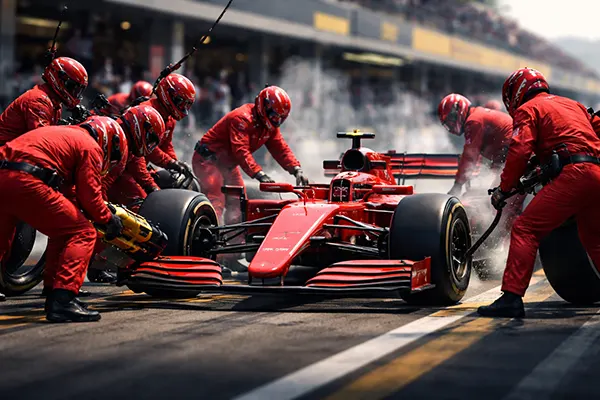
A Formula 1 pit stop lasts little more than two seconds in 2026, yet behind that brief burst of action lies months of preparation, physical conditioning and relentless rehearsal. Modern pit crews operate with surgical precision while managing extreme heat, noise and championship-level pressure. Each member has a clearly defined role, and even the smallest hesitation can cost positions on track. Understanding how these crews train and what tends to fail when the tension peaks reveals just how technical and demanding a pit stop has become in contemporary Formula 1.
How Modern F1 Pit Crews Train for Sub-Two-Second Stops
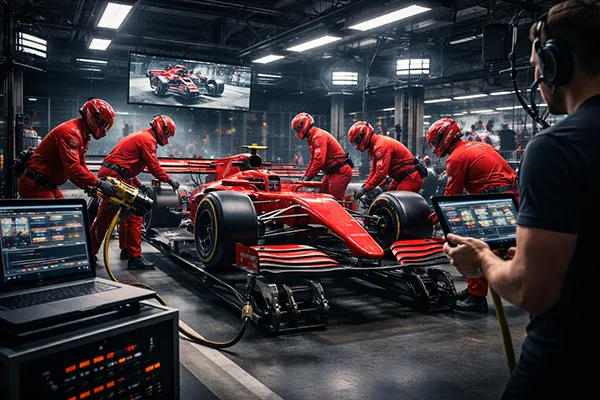
In 2026, top teams consistently record pit stops between 2.0 and 2.3 seconds during race conditions, with marginally faster times possible in controlled scenarios. Achieving this requires structured daily practice at factory facilities. Crews rehearse full pit sequences repeatedly using real cars mounted on practice rigs, simulating race conditions including tyre temperature, brake heat and rapid car positioning.
Physical conditioning plays a crucial role. Wheel gunners and tyre carriers follow strength and power programmes similar to elite sprinters, focusing on explosive upper-body force and core stability. A single wheel and tyre assembly weighs roughly 20 kilograms, and it must be removed and replaced with absolute accuracy. Reaction drills using light and sound cues are integrated to refine split-second coordination.
Teams also employ motion analysis technology. High-speed cameras record each movement during practice stops, allowing engineers to study micro-delays measured in hundredths of a second. Data from torque sensors in wheel guns and pressure sensors in wheel nuts provide immediate feedback. This analytical approach ensures that improvements are based on measurable performance rather than intuition.
Simulation, Role Specialisation and Mental Preparation
Every pit crew member has a fixed assignment: front and rear jack operators, wheel gunners, tyre off and on carriers, stabilisers and the release operator. Role specialisation reduces decision-making time and builds muscle memory. Crews practise thousands of repetitions per season to make movements automatic, even when adrenaline levels surge during a race.
Simulators are now part of pit crew preparation. Some teams use virtual reality systems to recreate crowded pit lanes, unpredictable car angles and safety car scenarios. These tools help mechanics rehearse unusual situations such as damaged wings or awkward tyre alignment without risking physical equipment.
Mental resilience is trained deliberately. Sports psychologists work with pit crews to improve focus under scrutiny from millions of viewers and live television broadcasts. Breathing techniques and structured pre-stop routines help reduce cognitive overload. When a championship is at stake, maintaining composure can be as critical as physical speed.
Equipment Under Stress: What Commonly Fails During a Pit Stop
The most frequent technical issue during pit stops involves the wheel gun or the wheel nut engagement. Despite advances in materials and sensor systems, improper alignment between the gun and nut can cause cross-threading or incomplete fastening. Since 2021 regulations mandated more standardised wheel nut designs and sensor confirmations, outright unsafe releases have decreased, but minor delays still occur.
Wheel gun reliability remains central. These pneumatic or hybrid-electric tools operate at extremely high torque levels and must deliver consistent performance in high-temperature environments. Dust, carbon debris and vibration can affect calibration. Teams regularly rebuild and recalibrate guns between sessions to prevent unexpected slowdowns.
Another stress point is the front jack mechanism. If the car stops a few centimetres off the ideal mark, the jack operator may struggle to lift the nose cleanly, losing precious tenths. Carbon fibre components can also suffer damage during aggressive race conditions, complicating alignment during the stop.
Human Error and Communication Breakdowns
Even with advanced sensors that confirm wheel attachment before the release signal, human error has not disappeared. A slightly mistimed signal or hesitation by the release operator can cost positions. While modern control systems require confirmation from each wheel before the car is allowed to drop, synchronisation must still be flawless.
Communication between the race engineer and pit wall influences preparation timing. If a driver enters the pit lane unexpectedly due to strategy changes or weather shifts, the crew may have only seconds to reset their stance and focus. Rapid decision-making increases the likelihood of small missteps.
Pressure intensifies during double-stack stops, where two team cars pit on consecutive laps or even back-to-back. Crews must reset immediately after servicing the first car. Fatigue and residual adrenaline can affect grip strength and reaction time, especially in physically demanding circuits such as Singapore or Qatar, where ambient temperatures exceed 30°C.
Pressure Moments: Why Failures Happen at Critical Times
Championship-deciding races amplify every risk factor. When margins between teams are measured in tenths, pit stops become strategic weapons. Crews know that a single slow stop may compromise months of engineering development. This awareness increases psychological strain, particularly during late-season title battles.
Environmental conditions also contribute. Rain introduces slippery surfaces and reduced visibility in the pit lane. In wet conditions, tyre carriers must maintain footing while handling heavy intermediate or full wet tyres. Minor slips can interrupt rhythm and delay wheel placement.
Mechanical wear accumulates over a race weekend. Repeated use of jacks, wheel guns and air lines can degrade performance. Although teams conduct inspections between sessions, race-day intensity may expose weaknesses that were not evident during practice.
Lessons from Recent Seasons and Ongoing Improvements
Between 2022 and 2025, several high-profile races demonstrated how marginal errors can alter championship outcomes. As a result, teams have refined their internal review systems. Post-race analysis now includes biomechanical assessments of crew posture and fatigue, not just mechanical data.
Automation continues to evolve cautiously. While regulations prevent fully automated pit stops, sensor integration has improved safety significantly. Wheel attachment confirmation systems now provide redundant signals before car release, reducing the risk of loose wheels on track.
Ultimately, a pit stop remains a human performance executed in a technological environment. Training methods in 2026 blend athletics, engineering and psychology. When everything functions perfectly, the stop appears effortless. Yet beneath those two seconds lies a complex network of preparation, equipment reliability and disciplined teamwork that defines modern Formula 1.